Goli Ashwagandha Gummies vs Capsules: An Honest Format Comparison
Gummies and capsules both deliver ashwagandha. The real differences are format, added ingredients and what each label actually publishes. Here is a fair breakdown.

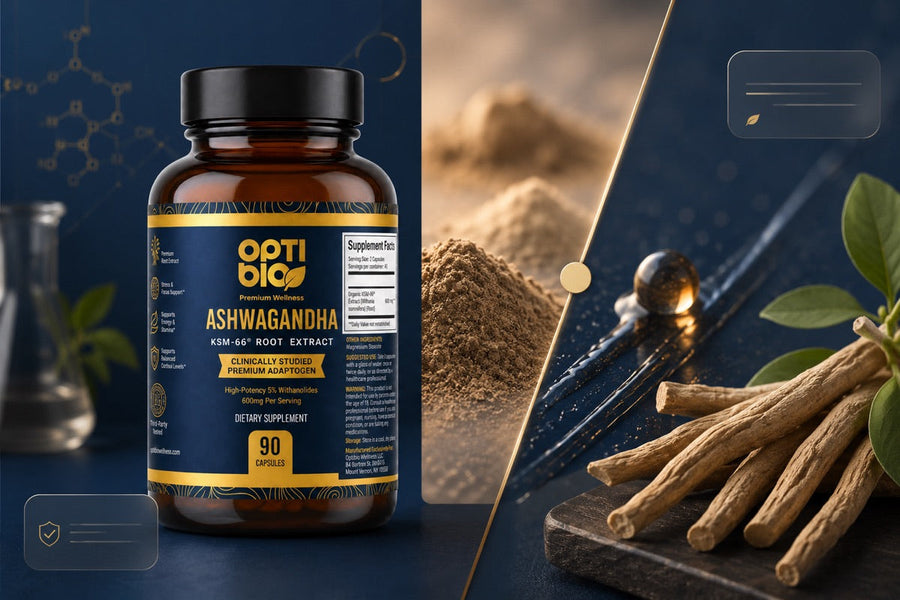
Quick answer: Goli’s ashwagandha gummies and Optibio’s capsules both use KSM-66® ashwagandha. Goli’s suggested use is 2 gummies twice daily (4 gummies per day), and its gummies also add Vitamin D2. Goli does not publish the exact milligrams of KSM-66® per serving on its page, so a precise dose comparison from the label is not possible. Gummies use a sweetened base and add calories, while capsules deliver ashwagandha with no added sugar. Optibio™ Ashwagandha KSM-66® lists 600mg per 2-capsule serving and is ashwagandha-only.†
Gummies are a legitimate format choice for supplements, and both products here use the same licensed KSM-66® extract. The honest differences are about format, added ingredients and label transparency, not a hidden dose trick. Here is the fair breakdown.
Gummy versus capsule: the format trade-offs
| Optibio™ Capsule | Goli Gummy | |
|---|---|---|
| Active ingredient | KSM-66® ashwagandha | KSM-66® ashwagandha plus Vitamin D2 |
| KSM-66® per serving | 600mg (2 capsules) | Not published on the label per serving (check current Supplement Facts) |
| Suggested use | 2 capsules daily | 2 gummies twice daily (4 gummies per day) |
| Added sugar | None | Sweetened gummy base (see label for grams) |
| Calories | Minimal | Adds calories from the sweetened base |
| Format | Swallowed capsule | Chewable gummy, easier if you dislike pills |
| Other ingredients | Vegetable cellulose capsule, magnesium stearate | Sweeteners, pectin and flavorings for the gummy base |
| Supply per bottle | 90 capsules, a 45-day supply at 2 per day | Varies by count and serving, check the label |
What the labels do and do not tell you about dose
Optibio lists 600mg of KSM-66® per 2-capsule serving directly on the Supplement Facts panel, so you know exactly how much you are getting. Goli’s published page describes KSM-66® ashwagandha with added Vitamin D2, but it does not state the exact milligrams of KSM-66® per serving. That means a precise dose comparison from the label is not possible today.
If dose matters to you, the practical step is to check Goli’s current Supplement Facts panel and compare the milligrams per serving side by side with the amount you want. Do not assume a figure that the label does not publish.
What gummies add beyond ashwagandha
The biggest difference between the two formats is what rides along with the ashwagandha. A gummy needs a base to hold its shape and taste, so it includes sweeteners, pectin and flavorings. That base adds some sugar and calories to each serving. Goli’s ashwagandha gummies also include Vitamin D2, which some people want and others do not.
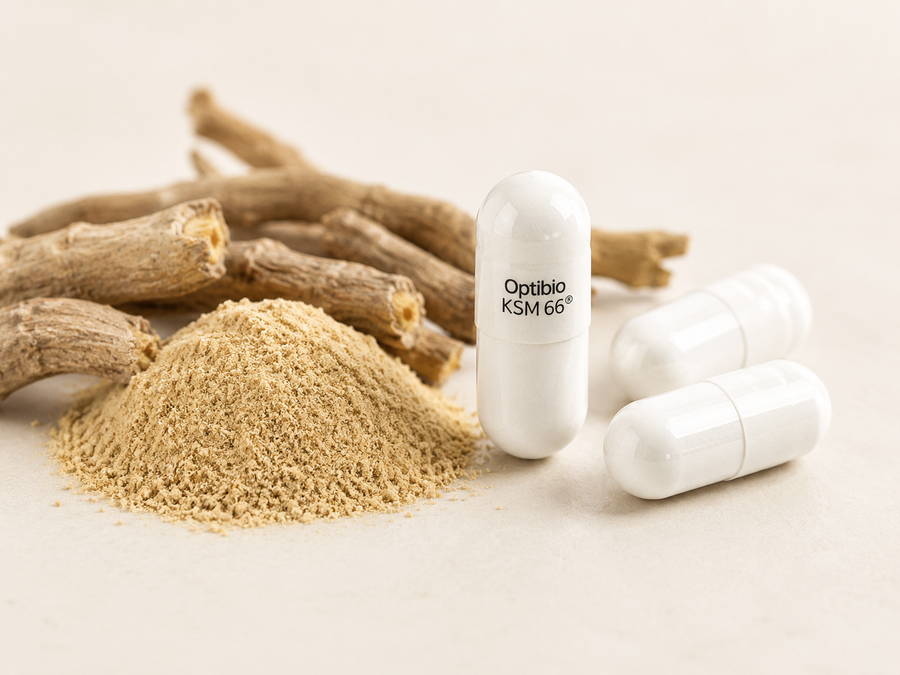
Optibio’s capsules take the opposite approach. The only active is KSM-66® ashwagandha, held in a vegetable cellulose capsule with magnesium stearate. There is no added sugar and no extra vitamin, so what you take is just the ashwagandha.
When gummies are a reasonable choice
- You genuinely dislike or cannot swallow capsules. Some people have a strong gag reflex or difficulty swallowing pills. A chewable gummy is a real solution, not just a marketing convenience.
- A sweetened format helps you stay consistent. The candy-like format is more of a habit builder for some people, and building the daily routine can be worth a small format trade-off.
- You want the added Vitamin D2. If you are looking for a little extra Vitamin D alongside ashwagandha, the gummy bundles both.
When capsules make more sense
- You are watching added sugar. A sweetened gummy base adds sugar that a capsule does not.
- You are monitoring blood sugar. If you are keeping an eye on glucose, a sugar-based format may not be the one you want.
- You want the exact dose on the label. Optibio publishes 600mg of KSM-66® per serving, so there is no guesswork.
- You want ashwagandha only. If you would rather skip the added vitamin and sweeteners, a single-active capsule keeps it simple.
Safety and who should check with a professional first
Ashwagandha is generally well tolerated in short and medium term studies, but a few groups should speak with a qualified healthcare professional before starting, regardless of format:
- Thyroid conditions, ashwagandha may influence thyroid hormone levels, so anyone managing hypothyroidism, hyperthyroidism or thyroid medication should ask their clinician first.
- Autoimmune conditions, if you live with lupus, rheumatoid arthritis or a similar condition, check with your provider before use.
- Pregnancy or breastfeeding, ashwagandha is generally not recommended, so speak with your obstetrician before considering it.
- Medication interactions, use caution alongside sedatives, immunosuppressants, thyroid medication or blood sugar lowering medication.
For a fuller walkthrough, see our ashwagandha safety and daily use guide. It is background information, not a substitute for personal medical advice.
Frequently asked questions
What is Goli’s suggested use for its ashwagandha gummies?
Goli’s label suggests 2 gummies twice daily, which is 4 gummies per day. Serving directions can change, so confirm the amount on the current label.
How much KSM-66® is in Goli’s gummies?
Goli does not publish the exact milligrams of KSM-66® per serving on its page, so a precise dose comparison from the label is not possible. Check Goli’s current Supplement Facts. For reference, Optibio lists 600mg of KSM-66® per 2-capsule serving.
Do Goli gummies use real KSM-66®?
Goli states its ashwagandha gummies use KSM-66® ashwagandha, and they also include Vitamin D2. The ashwagandha extract is the same licensed material found in many capsules.
Are gummies or capsules better for ashwagandha?
It depends on your priorities. Gummies suit people who dislike swallowing pills, but they use a sweetened base that adds some sugar and calories. Capsules deliver ashwagandha with no added sugar and, in Optibio’s case, publish the exact dose per serving.
Does Optibio’s ashwagandha have added sugar?
No. Optibio’s only active is KSM-66® ashwagandha in a vegetable cellulose capsule with magnesium stearate. There is no added sugar and no added vitamin.
The bottom line
Goli’s ashwagandha gummies and Optibio’s capsules both use licensed KSM-66® ashwagandha. Goli’s suggested use is 2 gummies twice daily, its gummies add Vitamin D2, and it does not publish the exact milligrams per serving, so check its current label if dose matters to you. Gummies use a sweetened base that adds sugar and calories, which is fine for some people and not for others. Capsules deliver ashwagandha with no added sugar and a published dose. Optibio™ Ashwagandha KSM-66® lists 600mg per 2-capsule serving and is ashwagandha-only.†
See our 2026 ashwagandha buyer’s guide for the full landscape, or read why KSM-66® extract quality matters.
Shop Optibio Ashwagandha KSM-66® →
References
- National Center for Complementary and Integrative Health. Ashwagandha: What You Need To Know. U.S. Department of Health and Human Services.
†These statements have not been evaluated by the Food and Drug Administration. This product is not intended to diagnose, treat, cure, or prevent any disease.